

There’s a moment every growing trades business reaches when the way you’ve been running jobs stops being enough. It doesn’t happen all at once. It happens when you add your third crew and realize nobody knows what the other two are doing.
When you land a larger commercial contract and the documentation requirements are bigger than anything your current workflow can handle. When you’re hiring fast and the new starters don’t have a system to follow — just a group chat and knowledge that only lives in one person’s head.
The jobs are still getting done. But it’s costing more effort to make that happen than it should. And the bigger you grow, the more it adds up.
These are the six signs that your operation is outgrowing its current systems — and what a contractor who’s gotten ahead of it is doing differently.
Paul Asher is the owner of Blue TeKnologies, a UK-based data and network cabling company. His business is growing — he’s building an in-house team after years of relying on agency workers — and he made the decision to get the right systems in place before the volume forced his hand.
1. Your Documentation Is a Deliverable, Not a Habit
On some jobs, documentation isn’t just good practice, it’s a contractual requirement. Certified test results, sign-offs, as-builts. These aren’t internal records. They’re deliverables clients expect and contracts require.
When you’re running one or two jobs, managing that output is doable. When you’re running five or six at once, and growing, it becomes its own problem on top of the work itself. Someone is always scrambling for the right documentation before handoff. Photos are buried in a crew member’s camera roll. Sign-offs are missing. The scope change from last week never made it into the file.
The contractors who scale past this don’t solve it by reminding their crews more often. They make documentation part of how the job gets done—captured in the field, attached to the project in real time, from the first site visit to the final sign-off.
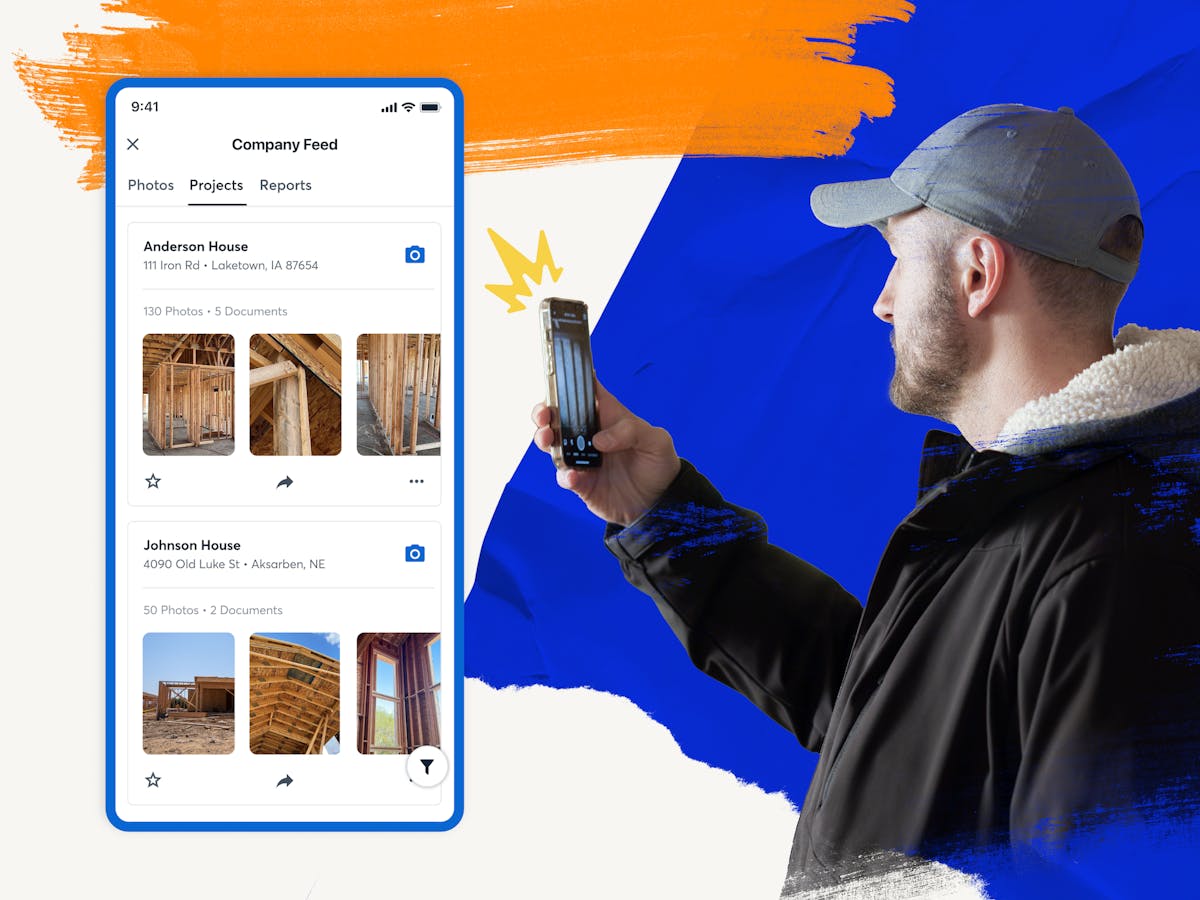
Blue TeKnologies built this discipline early, before it became a problem. Before their new starters ever touched a tool, Paul had a system in place: before, during, and end-of-task photos for every phase, stored with the project automatically.
“It’s making them think about what they’re doing because they have to pause, take a picture, and then think about what they’re doing next,” says Paul.
That same habit is what protects him when a client comes back years later with a warranty question. He pulls up the proof in minutes.
“It’s making them think about what they’re doing because they have to pause, take a picture, and then think about what they’re doing next.”
2. You’re Running External Coordination Through Internal Channels
On larger commercial jobs, you’re rarely working alone — main contractors, other trades, architects, clients. The more moving parts on a job, the more people you’re juggling. And when that coordination runs through the same WhatsApp threads and email chains as your internal crew communication, things get missed.
A photo goes to the wrong thread. A document doesn’t open because someone’s on a different device. Someone gets dropped from a message chain right before a decision gets made. On a job where other trades are waiting on you, that’s half a day lost while everyone gets back on the same page.

This is where growing operations tend to feel the friction first. Paul watched one of his own clients run everything through WhatsApp while managing multiple jobs at once with subcontractors involved.
“Every time they’re on site, they’re WhatsApp-ing pictures to each other. And then they’ve missed somebody out.”
When everything runs through one thread, there’s no structure — photos aren’t labeled, context gets buried, and anyone who wasn’t in the right conversation at the right time is working blind. When job information is organised by project in real time, everyone involved in the job — crew, subcontractors, office, client — has what they need the moment they need it. The back-and-forth doesn’t get managed. It just stops happening.
“Every time they’re on site, they’re WhatsApp-ing pictures to each other. And then they’ve missed somebody out.”
3. You Have No Way to Verify a Job Is Done Before the Crew Leaves
Paul had two agency workers finishing a job in London. They said they were done. He had no system in place to verify it, so he took their word for it. When he arrived later, the site was a mess — equipment left behind, rubbish everywhere, access control knocked offline. He sent two people back down to clean up, paid for an engineer to fix the access control, and covered the site staff who’d had to stay late.
“Had we been doing this and I’d added him as a subcontractor, I’d have been like: you’re not going until I see these pictures. Instantly, you’d know whether it has or hasn’t been done.”

When photo sign-off is the standard for completing a job, not an optional task, owners can see whether it’s actually done before anyone leaves the site. Not when they arrive the next day. Paul doesn’t pay for rework he could have caught in real time — and the London job made sure of it.
“Had we been doing this and I’d added him as a subcontractor, I’d have been like: you’re not going until I see these pictures. Instantly, you’d know whether it has or hasn’t been done.”
4. Your Office Is Always One Step Behind the Field
At a certain point in growth, someone in your office starts spending real time tracking down information from wherever it landed. Photos on a crew member’s phone. Documents on a shared drive nobody’s organised since the job started. Updates that require a call to get.
This is one of the clearest signs a growing operation has maxed out its systems. The information exists — it’s just not where anyone can use it. And the more jobs you take on, the more time someone spends chasing information that should already be at their fingertips.
Paul estimates CompanyCam saves him a minimum of four to five hours a week just in time spent accessing job files—no drive to the field, no scrolling through text threads, no call to a crew member.
When everything’s running through WhatsApp, someone has to save every photo, re-save it, relabel it, and drop it into the right folder — across every job, team, and day. As Paul puts it: “If you’ve got five, six, eight, ten teams out there, it’s almost a full-time admin job. Whereas [with CompanyCam], it’s datestamped, it’s geotagged, it’s attached to the project. Done.”
5. Scope Changes Are Getting Disputed After the Fact
Jobs drift. A client asks for something extra on site, the crew says yes, and two weeks later nobody has it in writing. Paul knows this pattern well — and it used to cost him.
“A lot of the builders and clients try and get you to do stuff that you’re not going to get paid for. They’ll say, ‘Yeah, we agreed to this in a meeting — can you put this in?’ And the lads on site go, ‘Yeah, no problem,’ and they do it. And then I come around and go, ‘Why did we put that in?’ And they say the client said so.”
From there it becomes a back-and-forth: Prove it was agreed, fight for payment, or eat the cost. Often all three.
Now, approved variations go straight into the project documents the moment they’re agreed. Everyone on site sees the latest version immediately. There’s no dispute. No two to three days of back-and-forth before the job can move forward. The record is just there.

“A lot of the builders and clients try and get you to do stuff that you’re not going to get paid for. They’ll say, ‘Yeah, we agreed to this in a meeting — can you put this in?’ And the lads on site go, ‘Yeah, no problem,’ and they do it. And then I come around and go, ‘Why did we put that in?’ And they say the client said so.”
6. Your Systems Aren’t Ready for the Work You Want to Win
This is the sign with the biggest business consequence because it’s the one that limits growth directly.
Bigger jobs mean longer timelines, more phases, more people involved, and more documentation required to protect yourself when something gets questioned. The contractors who grow into that work aren’t just more experienced. They have systems that can absorb the complexity — and demonstrate to clients that they can manage it.

For Paul, building that system early was what gave him the confidence to go after more. He stores documentation for every completed project. Scope changes are recorded as they happen. He’s clear that he couldn’t manage his current volume without it — and that having that system gave him the confidence to go after larger, more complex work.
The difference between a growing operation and a scaled one isn’t usually technical ability. It’s whether your systems can support the work you’re trying to win.
Getting the System in Place Before You Need It
The contractors who scale without chaos aren’t reacting to things falling apart — they’re building the foundation before the volume demands it. They create a single place where job photos, documentation, checklists, and crew communication live together, accessible to everyone who needs it. Attached to the right project from first site visit to final handoff.
CompanyCam is built to be that layer — for growing operations that want to take on more work without adding more overhead to manage it.

Ready to take on more work?
See how CompanyCam helps growing contractors manage the load before it gets ahead of them.


