

CompanyCam works for teams of all sizes, but growing companies use it differently. Small teams use it to document jobs and stay organized. Crews with multiple teams use it to manage operational complexity: dozens of concurrent jobs, multiple crews, standardized reporting, and oversight across job sites they can’t physically visit every day. As your operation grows, CompanyCam becomes more than documentation software but operational visibility.
Managing Multiple Concurrent Jobs
When you’re running 30 to 50 jobs at a time across multiple crews, information doesn’t just get scattered — it disappears. Updates come through texts, calls, and side conversations. By the time a question reaches the office, three people have already been interrupted to answer it.

The operational cost of that isn’t just inconvenience. It’s lost time, slower decisions, and jobs that fall through the cracks because no one had a clear picture of where things stood.
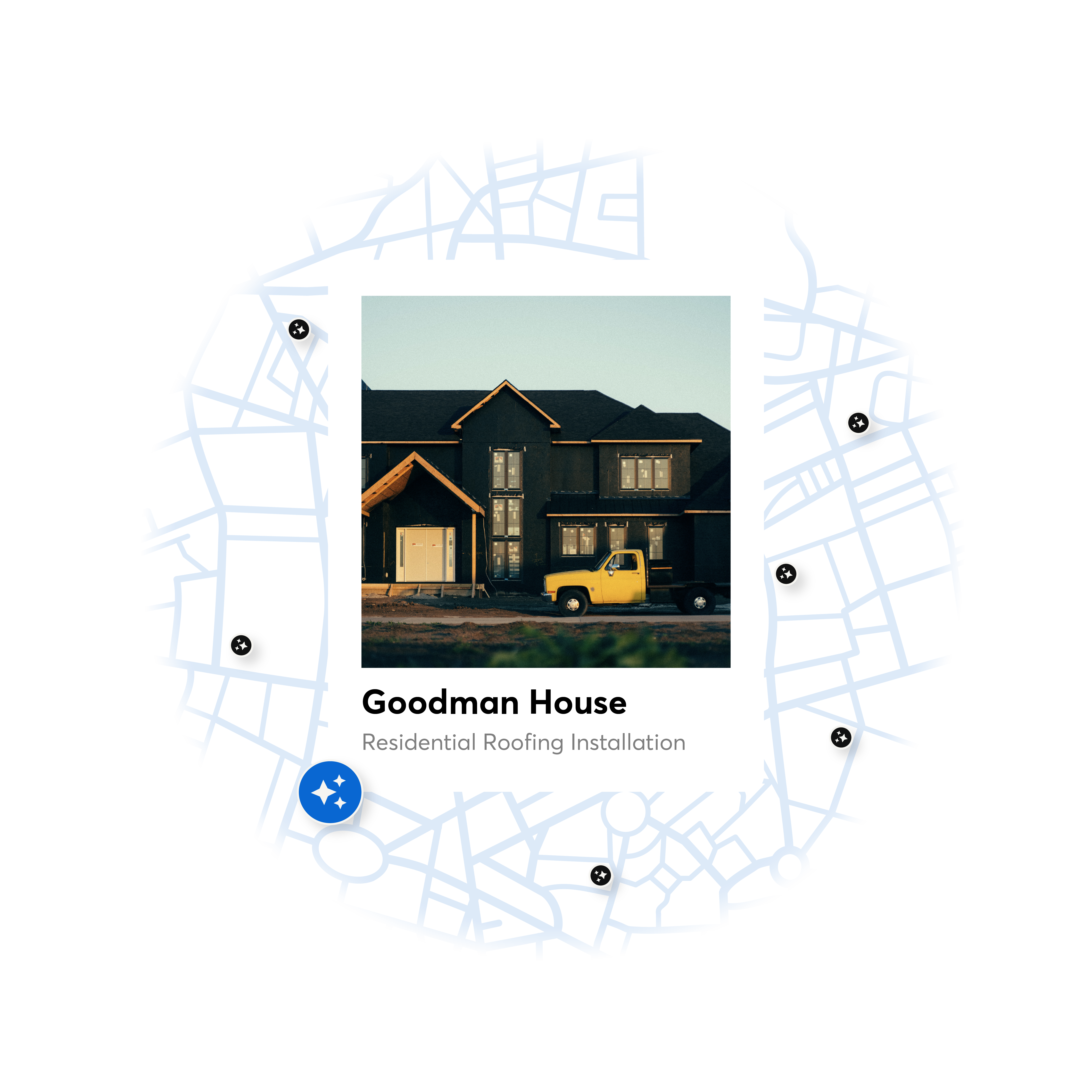
CompanyCam centralizes everything by project. Every photo, update, checklist, and comment lives in one place, attached to the job it belongs to. When someone in the office needs to know the status of a job, they don’t have to call anyone. They open the project and see it.
That shift, from chasing updates to checking the project, reduces interruptions, speeds up decisions, and protects project managers from becoming human dispatch centers.
Oversight Without Driving to Every Site

At a certain point, physically visiting every job site stops being a viable management strategy. With crews spread across multiple locations and jobs running simultaneously, windshield time becomes one of the biggest drains on a project manager’s day.
CompanyCam gives owners and PMs real-time visibility into every active job without leaving the office. Updates are time-stamped and GPS-tagged as they come in. You can see what happened on-site this morning, flag a concern, and communicate directly on the project all before the crew moves to the next task.
The result isn’t just convenience, it’s operational leverage. Fewer unnecessary site visits. Faster issue resolution. More time focused on planning, estimating, and growing the business instead of reacting to it.
Standardized Reporting Across Every Crew
When you have multiple crews running jobs simultaneously, consistency becomes a real problem. Every crew documents differently. Every PM writes reports their own way. Without a standard process, the quality of your documentation depends entirely on who’s running the job that day.
At scale, inconsistency becomes a liability—in customer disputes, insurance claims, warranty issues, and internal accountability.

CompanyCam’s project templates and checklists give every crew the same starting point on every job. Task sign-offs, required documentation, and project milestones are built into the workflow before work begins. When a job closes, the documentation is already there: consistent, timestamped, and organized the same way regardless of which crew ran it.
That kind of standardization doesn’t happen by accident. It requires a system built into the workflow from the start.
Getting More Reviews Without Chasing Them
Higher job volume creates a real opportunity for reputation growth but only if you have a consistent process for asking. Most growing companies don’t. Reviews happen sometimes, on some jobs, when someone remembers to follow up.

CompanyCam’s built-in Reviews feature turns job closeout into a repeatable process. Once a job wraps, you can send a review request directly from the project via text, email, or QR code. With job site documentation already attached, customers can include photos in their Google review. Customers click the link and submit their review in seconds.
When you’re completing dozens of jobs each month, review volume becomes a growth lever, but only if the ask is consistent.
Over time, that consistency compounds. More 5‑star reviews. More photo-rich proof of work. Stronger credibility when you’re bidding against competitors. Reviews stop being random and start becoming part of your marketing engine.
Built for the Way Teams Actually Work
For small teams, CompanyCam keeps things organized. For mid-sized teams, it becomes the operational backbone of a growing business — a coordination system that keeps crews aligned, jobs documented, and the office in control across every project, every day.

Growth adds complexity. The right system keeps it manageable.
Most contractors start by standardizing one crew, one project template, and one reporting process, and then expand from there. Within weeks, live jobs are documented consistently and the office has visibility without adding more meetings or phone calls.
CompanyCam scales with your business, adapting to your workflows, crew size, and operational demands at every stage of growth.
As your job count grows, visibility and consistency become harder to control.
Get started with CompanyCam to centralize updates and keep every project on track.


